
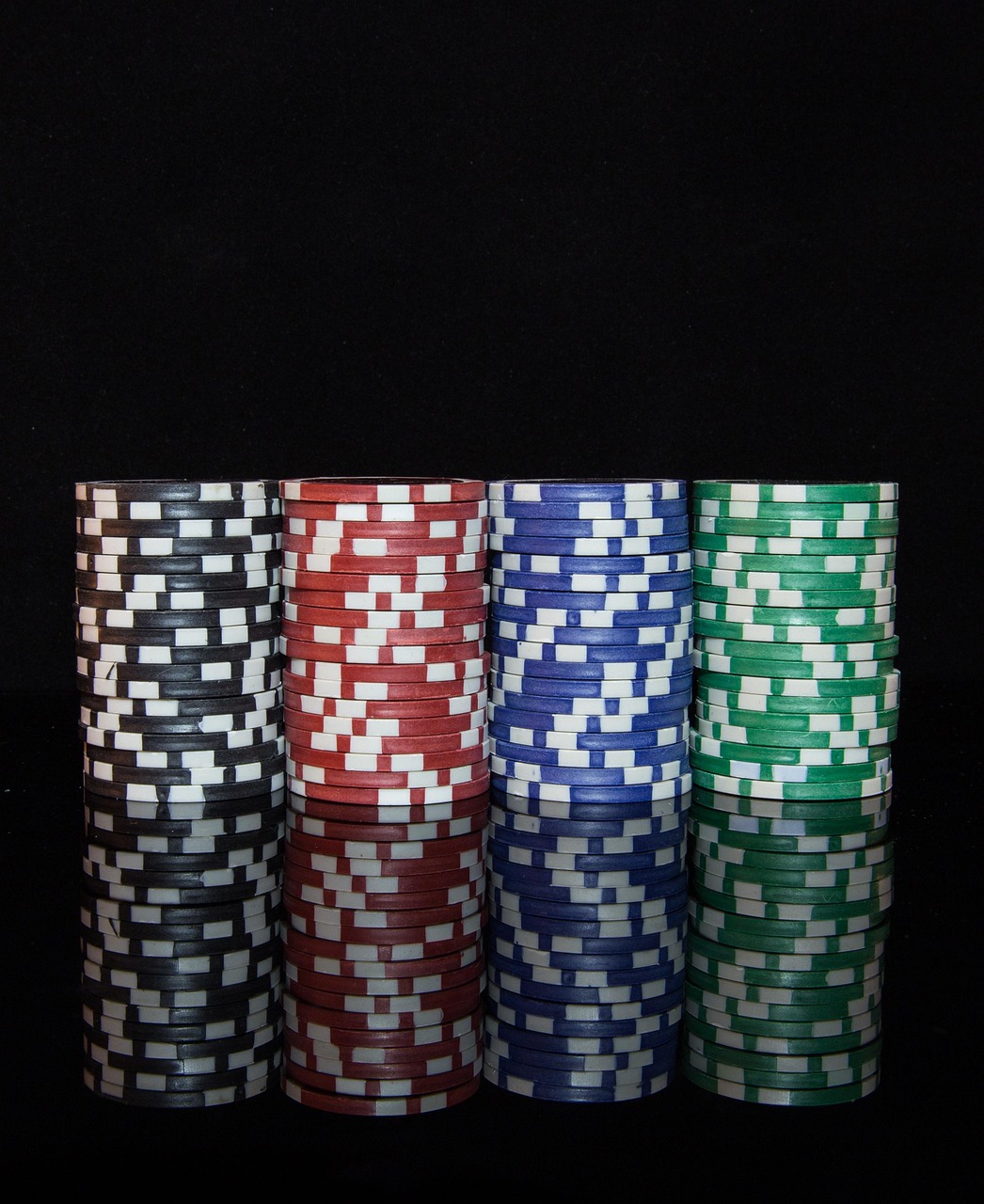


The House Always Wins? Not If You Understand Variance
Every gambler has heard the phrase "the house always wins." It's true, but it's also lazy. The house edge doesn't wipe out every player every night — if it…

Every gambler has heard the phrase "the house always wins." It's true, but it's also lazy. The house edge doesn't wipe out every player every night — if it did, nobody would ever play. What actually happens is subtler, and understanding it separates players who treat gambling as entertainment from those who treat it as a math problem they can outsmart. The difference comes down to variance: the short-term chaos that lets you walk away a winner even when the long-term odds are stacked against you.
Why Slots Are Brutally Simple (and Why That's the Point)
Slot machines are the purest form of gambling math. There's no decision to make, no bluff to read, no card to count. You press a button, a random number generator decides your fate, and the reels land wherever they land. The house edge on a typical land-based slot sits between 2% and 15%, while online slots often run tighter, sometimes as low as 1% to 5%, depending on the game and the jurisdiction.
Take a game with a 96% RTP — a common figure for modern video slots. That means for every $100 wagered, the machine is programmed to return $96 over millions of spins. Your $100 session might end at $250 or $0. The RTP says nothing about your night; it describes an average that only reveals itself across a volume of play no individual will ever reach.
Volatility matters just as much as RTP. A high-volatility slot like Money Train 2 can drain your balance for an hour and then pay a 20,000x bonus. A low-volatility game like Starburst will trickle small wins for a long time. Neither is "better" — they're different risk profiles. If you have $50 and want to play for two hours, low volatility is your friend. If you have $50 and want a shot at $1,000, high volatility is the only honest option.
- RTP is a long-run average, not a session prediction.
- Volatility determines how often and how hard the game swings.
- Max win caps on streamer-favorite slots often exceed 50,000x — but the odds of hitting them are measured in millions.
Blackjack and Poker: Where Skill Actually Moves the Needle
Blackjack is the only casino game where a competent player can shrink the house edge to under 1% using basic strategy — the mathematically optimal play for every hand combination. Memorize a single chart and you're already playing better than 90% of the people at the table. Add card counting and you can theoretically flip the edge in your favor, which is exactly why casinos shuffle more, use continuous shufflers, and ban suspected counters. The edge exists; it's just small enough that the house tolerates basic strategy because most players ignore it.
Poker is different in kind, not degree. You're not playing against the house's edge — you're playing against other players, and the house takes a rake, typically 5% to 10% of each pot, capped at a few dollars. A skilled player can beat the rake at low-stakes tables, but the margin is thin. The biggest leak for most players isn't bad luck; it's playing too many hands, chasing draws without pot odds, and paying off river bets with mediocre holdings.
If you want to improve fast at poker, track one stat: how often you voluntarily put money in the pot pre-flop. Most winning regulars sit between 18% and 25% in full-ring games. If you're above 35%, you're not playing poker — you're donating with extra steps.
The Betting Markets Nobody Talks About
Sports betting gets the headlines, but the quieter markets often offer better value. Closing line value — the practice of consistently beating the final odds before kickoff — is the single best predictor of long-term betting profitability. If you regularly get a team at +150 when the line closes at +130, you're doing something right, even if that particular bet loses. Before making a choice, it helps to review 78Win.
Prop bets and Asian handicaps tend to have lower margins than moneylines on major sports, sometimes 2% to 4% versus 5% to 7%. Live betting is the opposite — margins spike during in-play markets because operators know emotion drives impulsive wagers. The lesson is boring but true: shop lines across at least three or four books, and avoid betting on your favorite team when you're angry or euphoric. For more on this, see 78 Win.
- Line shop every bet — even a 20-cent difference compounds over hundreds of wagers.
- Track your closing line value, not just your win-loss record.
- Specialize in one or two leagues rather than betting everything.
Bankroll Management Is the Only Real Edge
You cannot control the cards, the reels, or the final score. You can control how much you risk. A simple rule that works across every game: never bet more than 1% to 2% of your total bankroll on a single wager. With a $1,000 bankroll, that's $10 to $20 per bet. It sounds conservative, and it is — that's the point. It keeps you in the game long enough for skill, if you have any, to show up.
Set a session stop-loss before you start. If you're down 30% of your session bankroll, walk away. If you're up 50%, consider banking half of it. The players who go broke aren't the ones with bad luck; they're the ones who kept buying in after the luck turned.
Also separate gambling money from real money. Rent, savings, and emergency funds should never touch a casino account. If you need those funds to play, you've already lost.
The Mental Game Nobody Warns You About
Tilt is real, and it costs more than any house edge. It's the urge to chase losses, to double your bet after a bad beat, to believe the machine owes you a payout. Every experienced gambler has felt it. The ones who survive recognize it in the moment and stop.
Chasing behavior is the single strongest predictor of problem gambling. If you find yourself increasing your bets specifically to win back what you lost, that's not strategy — that's a warning sign. Responsible gambling tools like deposit limits, session timers, and self-exclusion exist for a reason, and using them isn't a sign of weakness. It's a sign you understand that the house edge doesn't need your help.
Finally, remember why you're playing. If the answer is "to make money," the math is not on your side in most games. If the answer is "because I enjoy the sweat of a close hand or a bonus round," then you're in the right mindset. Entertainment has a cost. Budget for it like you would a concert ticket or a weekend trip, and you'll never have a bad night — just expensive ones you planned for and cheap ones you got lucky on.
The house always wins in the long run. The players who last are the ones who never let the long run catch them with money they couldn't afford to lose.